

When you ask, “Is Coinbase a safe wallet?” the answer depends entirely on which Coinbase product you’re using. The company offers two primary ways to store crypto: the Coinbase exchange and the Coinbase Wallet . Their security models are fundamentally different, and understanding this distinction is the key to evaluating their safety.
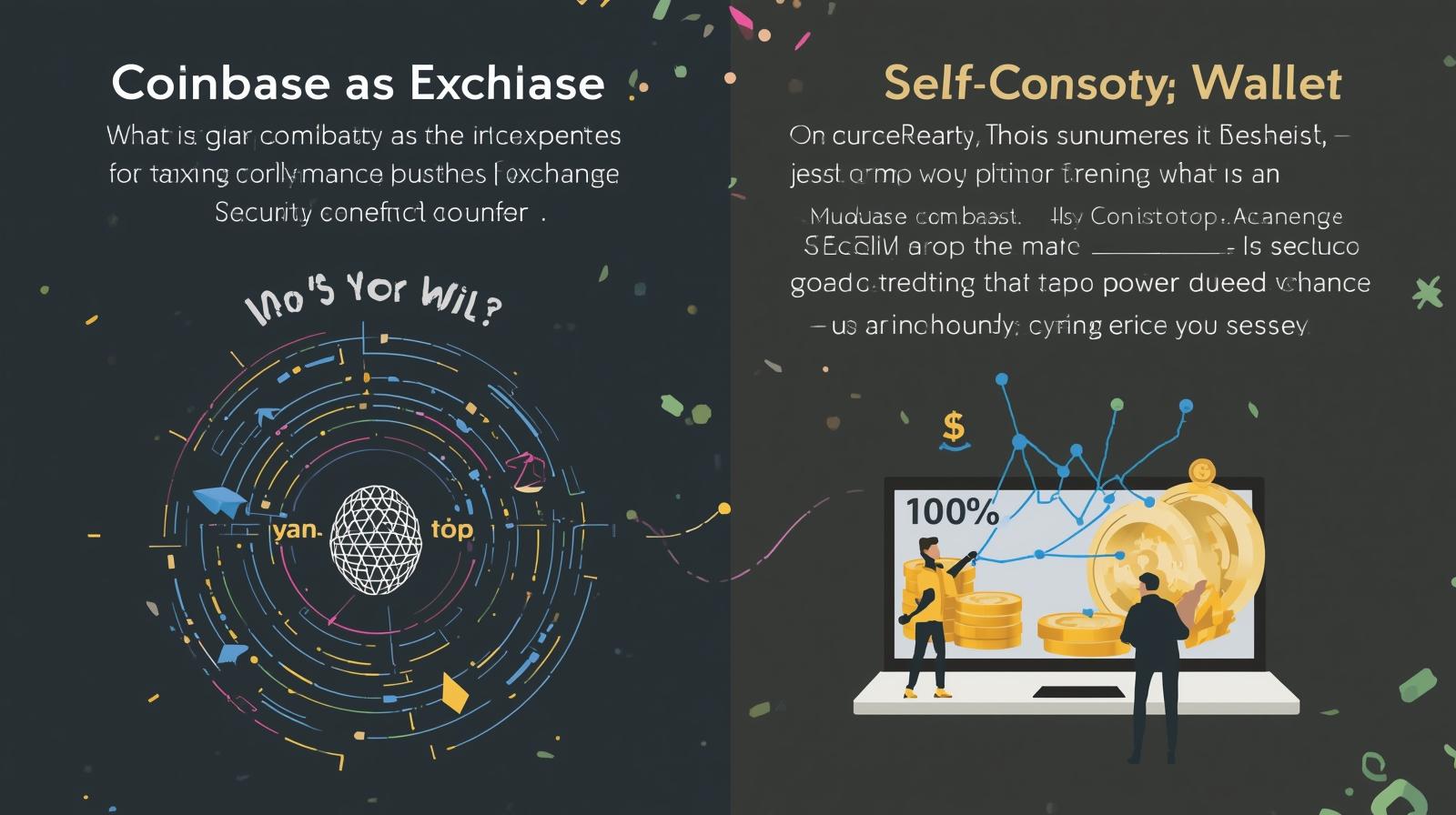
This guide will clarify the security of each, empowering you to make an informed choice.
1: The Coinbase Exchange (A Custodial Service)
When you buy crypto on the Coinbase app or website, you are using a *custodial* service. Think of it like a bank: Coinbase holds your assets on your behalf.
Security Strengths
FDIC Insurance on USD U.S. dollar balances are held in custodial bank accounts and are eligible for pass-through FDIC insurance coverage (up to $250,000) in case of a bank failure.
Asset Insurance Coinbase maintains a crime insurance policy that protects a portion of digital assets held in their online “hot storage” against theft from security breaches.
Cold Storage The company stores 98% of customer crypto assets in secure, offline cold storage, making them inaccessible to online hackers.
Corporate Security As a publicly-traded U.S. company, it employs robust security measures, including two-factor authentication (2FA), biometric logins, and AES-256 encryption.
Your Role in Security
Your responsibility is to maintain strong account security: using a strong, unique password, enabling 2FA, and guarding against phishing attempts.
2: Coinbase Wallet (A Self-Custody Service)
Coinbase Wallet is a separate, non-custodial app. Here, you are in full control—you hold the private keys to your assets. This is the true “wallet” in the cryptographic sense.
Security Strengths
User-Controlled Keys Your seed phrase (12-word recovery phrase) is generated on your device and is never shared with Coinbase. This means only you have access.
Biometric & PIN Lock: The app itself is secured by your device’s fingerprint, face ID, or a custom PIN.
Secure Enclave The wallet leverages your phone’s secure hardware to store private keys, making it difficult for malware to extract them.
Your Role in Security (This is Critical)
In a self-custody model, you bear 100% of the responsibility.
The Seed Phrase is Everything If you lose your 12-word recovery phrase, your funds are permanently gone. If someone else discovers it, they can steal everything. Coinbase cannot recover it for you.
Smart Contract Risk Interacting with decentralized apps (dApps) can be risky. A malicious smart contract could drain your wallet if you grant it permission.
Device Security The wallet’s safety is tied to your phone’s security. A compromised device can lead to a compromised wallet.
Comparing the Two: Safety vs. Control
| Feature | Coinbase (Exchange) | Coinbase Wallet (Self-Custody) |
Who Holds Keys? Coinbase (Custodial) | You (Non-Custodial) |
Best For | Beginners; those who prefer a bank-like experience | Experienced users; those exploring dApps, DeFi, and NFTs
Asset Recovery | Account recovery process through customer support | Only you can recover it with your seed phrase |
Insurance | FDIC on USD, crime insurance on online assets | No insurance Your security practices are the insurance. |
| Primary Risk | Platform-based risk (e.g., regulatory, company failure) | User error (losing seed phrase, approving bad contracts) |
Conclusion: So, Is It Safe?
The Coinbase Exchange is a very safe and secure custodial platform, especially for those who prioritize ease of use and institutional-level security protections. It is safe from external hackers but is subject to the risks of a centralized company.
Coinbase Wallet is a secure self-custody application, but its ultimate safety is determined by you. It provides excellent tools but places the burden of ultimate security squarely on the user.
Therefore, Coinbase offers safe products, but the type of safety changes. The exchange protects you from many risks, while the Wallet gives you the freedom—and responsibility—to protect yourself.
Disclaimer This blog post is for educational purposes only and is not security or financial advice. You are solely responsible for researching and securing your cryptocurrency assets.